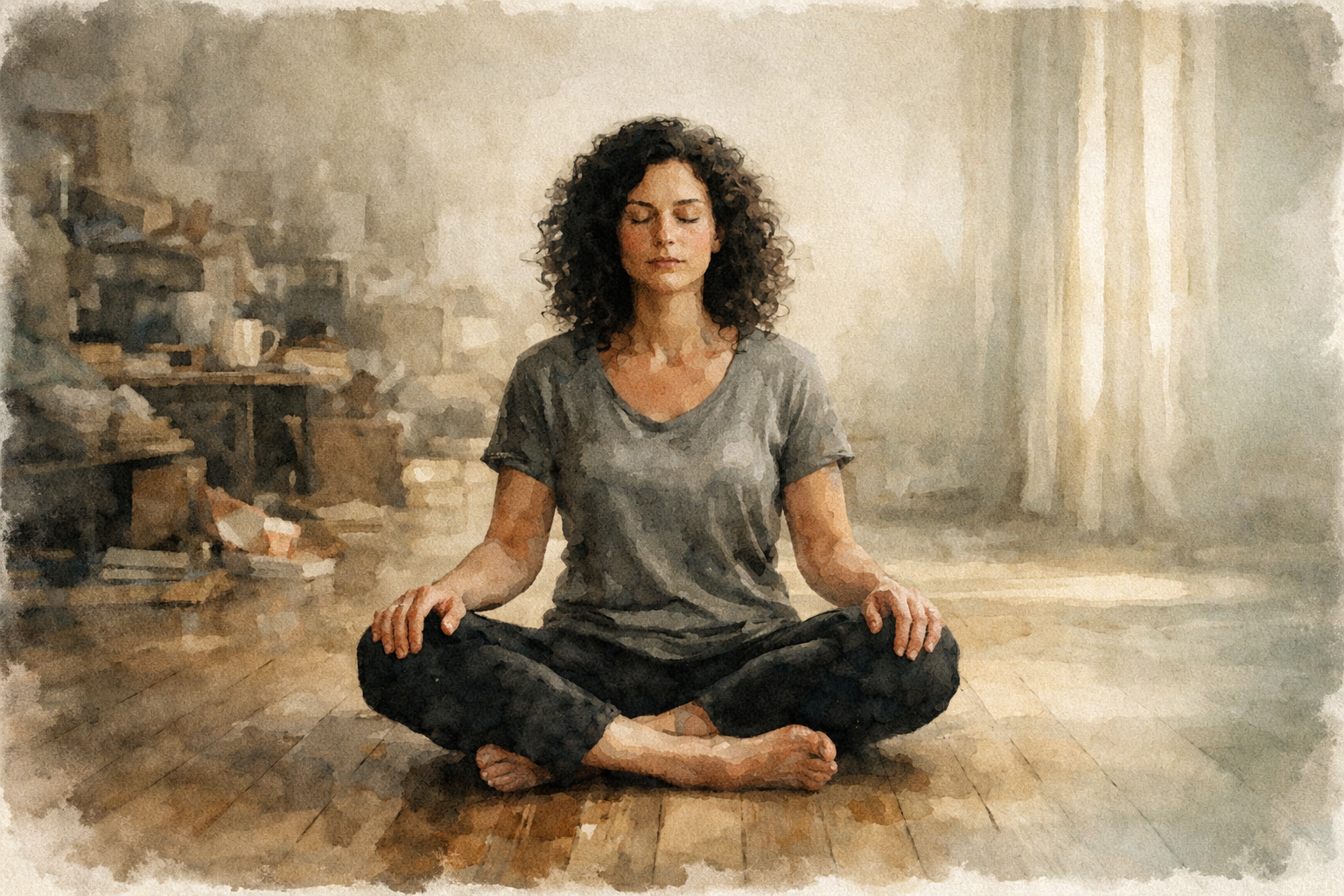
Quick Answer: Certain places drain empaths and highly sensitive people because these environments carry emotional residue, sensory overload, or social energy that your nervous system absorbs like a sponge. It’s not in your head. Your body is genuinely responding to something real. Grounding techniques — like physical touch with the earth, breathwork, or a simple body scan — can help you reset quickly, even mid-visit.
Key Takeaways
- Empaths absorb the emotional and sensory energy of places, not just people.
- High-traffic areas, hospitals, malls, and emotionally charged spaces are common drains.
- Your nervous system is doing the heavy lifting here — this is a physiological response, not a personal weakness.
- Grounding works by pulling your awareness back into your body and the present moment.
- You can prepare before entering a draining space, not just recover after.
- Short grounding rituals (under five minutes) are often enough to reset.
- Knowing why a place drains you helps you choose the right grounding response.
- You don’t have to avoid every hard place — you just need tools for when you’re in one.
Why Do Certain Places Drain You in the First Place?
Some places just feel heavy. You walk in and something shifts — your shoulders tighten, your mood drops, or you feel a vague unease you can’t quite name. For empaths, this is almost a daily experience.
The short answer: you’re picking up on energy that most people filter out without thinking.
Environmental psychology tells us that our surroundings affect our mood, stress levels, and even our physical health. But for empaths, that sensitivity is turned way up. You’re not just noticing the flickering fluorescent lights or the loud background noise. You’re absorbing the accumulated emotional weight of everyone who’s been in that space — their stress, their grief, their boredom, their anger.
Think of a busy emergency room waiting area. Most people feel uncomfortable there. An empath might feel wrecked after twenty minutes, even if nothing personally stressful happened to them.
That’s why certain places drain you — and understanding this is the first step toward doing something about it.
What Types of Places Are Most Draining for Empaths?
Not every place hits the same way. Some environments are almost universally draining for empaths; others depend on your personal history and sensitivities.
Common energy-draining environments:
- Hospitals and medical centers — saturated with fear, pain, and grief
- Shopping malls and big-box stores — sensory overload plus the emotional noise of crowds
- Offices with high conflict or stress — you absorb coworkers’ anxiety without even trying
- Secondhand stores and antique shops — objects carry emotional history (yes, really — many empaths feel this strongly)
- Crowded public transit — physical proximity to strangers’ emotional states with no escape
- Family homes with unresolved tension — familiar environments can carry old emotional imprints
- Social media “in real life” events — performative energy is exhausting to be around
Edge case worth noting: Sometimes a beautiful place drains you too — a stunning museum, a packed concert, even a friend’s wedding. The drain isn’t always about negativity. Intensity of any kind can be too much.
Is There a Real Reason Why Certain Places Drain You (And How to Ground Yourself When They Do)?
Yes, and it’s not just spiritual or metaphorical. There’s a grounded, practical explanation.
Your nervous system — specifically your autonomic nervous system — responds to environmental cues constantly. For highly sensitive people, research from psychologist Dr. Elaine Aron (who coined the term “Highly Sensitive Person” in the 1990s) suggests that the sensory processing system is simply more active. More input gets through. More gets processed.
Add to that the mirror neuron system, which helps humans feel empathy by mirroring others’ emotional states, and you start to see why certain places drain you so thoroughly. You’re not imagining it. Your brain and body are working overtime.
The good news? Grounding techniques work with your nervous system, not against it.
How to Ground Yourself When a Place Is Draining You
Grounding pulls your awareness back into your body and the present moment. It interrupts the cycle of absorption and gives your nervous system something concrete to focus on.
Quick grounding techniques you can use anywhere:
- The 5-4-3-2-1 method — Name 5 things you see, 4 you can touch, 3 you hear, 2 you smell, 1 you taste. Takes about two minutes. Works fast.
- Feet on the floor — Press your feet firmly into the ground. Feel the pressure. Breathe slowly. Remind yourself: I am here. This is my body. This energy is not mine.
- Cold water on wrists — If you can get to a bathroom, run cold water over your inner wrists. It activates the vagus nerve and signals your body to calm down.
- Box breathing — Inhale for 4 counts, hold for 4, exhale for 4, hold for 4. Repeat three times. Simple, discreet, effective.
- Mental boundary visualization — Imagine a soft bubble of light around you. Not a wall — just a filter. You can still connect, but you’re not absorbing everything.
Choose based on where you are:
| Situation | Best Grounding Method |
|---|---|
| Crowded public space | 5-4-3-2-1 or feet on floor |
| Work or office | Box breathing (invisible, quiet) |
| Hospital or medical visit | Cold water on wrists + breathing |
| Family gathering | Mental boundary visualization |
| Antique shop or charged space | Leave briefly, breathe outside |
Can You Prepare Before Entering a Draining Place?
You can — and honestly, this is where a lot of empaths miss an opportunity.
Most of us focus on recovery after we’ve been drained. But a little preparation before you walk in can make a real difference.
Before entering a draining environment:
- Set a clear intention: I am here for [specific purpose]. I don’t need to take on anything beyond that.
- Do a quick body scan — notice where you’re already holding tension before you even walk in.
- Eat something grounding (literally — root vegetables, nuts, warm food). Hunger amplifies sensitivity.
- Give yourself a time limit if possible. Knowing you’ll leave in an hour is itself calming.
- Wear something that feels like “you” — a familiar scent, a piece of jewelry, comfortable clothes. Anchors to your own identity help.
What If the Draining Place Is Somewhere You Can’t Avoid?
This is the hard part. Not every draining space is optional.
Your workplace. Your childhood home. The grocery store you have to visit three times a week.
For unavoidable spaces, the goal shifts from avoidance to recovery rhythm. You’re not going to stop feeling the drain. But you can get faster at resetting.
Build a post-exposure routine:
- Time alone (even 10 minutes in your car before going inside)
- Physical movement — a short walk, stretching, shaking out your hands
- A sensory reset — a shower, a favorite scent, music that feels like you
- Journaling one sentence: What I felt there. What I’m leaving there.
The ritual matters more than the specific activity. Consistency tells your nervous system: that’s done now. We’re safe.
Conclusion: You’re Not Too Sensitive — You’re Just Unprotected
Understanding why certain places drain you (and how to ground yourself when they do) isn’t about becoming less sensitive. It’s about becoming more resourced.
You feel things deeply. That’s not a flaw to fix. But you do need tools — real, practical ones — so that the world doesn’t leave you empty every time you step outside your door.
Start small. This week, try one thing:
- Practice the 5-4-3-2-1 technique in one challenging space.
- Create a five-minute post-exposure ritual after your next draining outing.
- Before entering a hard environment, set one clear intention out loud (or in your head).
You don’t have to do all of it at once. Just pick one. And notice what shifts.
Because you deserve to move through the world without losing yourself in it.
FAQ
Q: Why do I feel drained by places even when nothing “bad” happened there? A: Places hold emotional residue from the people who’ve been in them — and empaths pick this up even without a specific triggering event. It’s sensory and emotional absorption, not logic-based.
Q: Is feeling drained by places a sign of anxiety or something more? A: It can overlap with anxiety, but they’re not the same thing. If place-based drain is significantly affecting your daily life, talking to a therapist familiar with high sensitivity is worth considering.
Q: How long does it take to recover after being in a draining place? A: It varies. A quick grounding technique can help within minutes. Full recovery from a very intense environment might take a few hours or a full night’s sleep.
Q: Can objects in a place drain you, not just the people? A: Many empaths report feeling energy from objects, especially older or secondhand items. Whether you frame this spiritually or psychologically, the experience is real for a lot of sensitive people.
Q: What’s the fastest grounding technique for public spaces? A: The 5-4-3-2-1 sensory method or pressing your feet firmly into the floor. Both take under two minutes and require no props.
Q: Do grounding techniques actually work, or are they just distraction? A: They work by engaging the parasympathetic nervous system — the “rest and digest” state — which counters the stress response. It’s not distraction; it’s a physiological reset.
Q: Can I become less sensitive to draining places over time? A: You can build more resilience and faster recovery, yes. But the sensitivity itself tends to stay. The goal is working with it, not eliminating it.
Q: Why do some places feel draining even though I love them? A: Intensity of any kind — even positive — can overwhelm an empath’s system. A joyful, crowded event can be just as draining as a tense one.
Sources
- Aron, E. N. (1996). The Highly Sensitive Person: How to Thrive When the World Overwhelms You. Broadway Books.
- Stansfeld, S., & Matheson, M. (2003). Noise pollution: non-auditory effects on health. British Medical Bulletin, 68(1), 243–257. https://doi.org/10.1093/bmb/ldg033
- Evans, G. W. (2003). The built environment and mental health. Journal of Urban Health, 80(4), 536–555. https://doi.org/10.1093/jurban/jtg063